Clutter rarely shows up all at once. It slips in quietly—an extra basket of laundry here, an...





Clutter rarely shows up all at once. It slips in quietly—an extra basket of laundry here, an...

Regardless of how much you prepare for retirement, predicting which unexpected situation might put...

Aging is no joke to many of us. As British writer, John Mortimer said,
“The aging process is not...

Flexibility rarely gets much attention until it starts slipping away. A stiff neck in the morning....
10 Signs It Is Time to Declutter Your Home
Everybody talks about decluttering, but what is clutter really? What might be a distracting mess to you might be comfortable chaos for me. Nevertheless, most of us would agree there is a limit to how much clutter we can live with and retain our sanity. In fact, neuroscience experts say that excessive clutter can hurt our mental health. For instance, research has shown that it’s harder to focus mentally in a disorganized environment.
So, if you’re wondering whether the level of disorder in your space rises to the level of “too much stuff”, here are some signs that it's time to declutter your home.
Do you often find yourself wondering where you put something important? Rather than a sign of impending mental decline, it might be an indication that you are living with too much clutter. It's hard to find what you need when there's “stuff” everywhere. By taking the time to organize your home, you’ll be gratified to avoid wasting countless hours tracking down lost items.
To solve this problem, start clearing these areas and tossing out what you don't need. Another option is to invest in closet organizing systems. These can be added to make more efficient use of existing spaces.
We all have bills, letters, and other important documents to keep track of. We also may have subscriptions to magazines and newspapers. Problems can start when you're not organizing your crucial documents or when you don't throw away accumulating periodicals and junk mail. Soon, paper piles appear throughout your home. Although not all paper piles signify clutter, they're usually a high percentage of those that can be tossed or recycled. Failing to do so not only causes an unsightly mess but could risk turning into a clutter-related fire hazard.
A great tip for avoiding these piles is to opt for paperless options from the bank, credit card company, and other firms with which you do business.
Another common clutter area is your floors. At the end of a long day, the floors are an easy place to toss shoes, clothes, and other items. Over time, it can become hard to see or remember what clean floors even looked like!
Once your floor space becomes cluttered, the entire home begins to feel that way. If virtually every inch of floor space is covered by your stuff, it may be a clear sign that you have too many possessions. Plus, everything feels crowded. It not only looks messy, but it’s a safety hazard for falls.
To put an end to cluttered floors, consider buying a few shoe racks or storage bins. These items provide places to store clothing and other items that commonly end up on the floor.
Clutter often includes paperwork and unresolved decisions. Final Expense Insurance helps ensure important plans are documented and handled thoughtfully.
Almost everyone leaves a few dishes in the sink from time to time. However, if you're not keeping up with washing them, a few plates and utensils can soon fill a sink with dirty dishware. Food left on dirty dishes can also attract ants, cockroaches, and other pests. For a safer, cleaner kitchen, start by placing dishes in the dishwasher right after use. This is easier than it seems, since many dishwashers require minimal rinsing before loading.
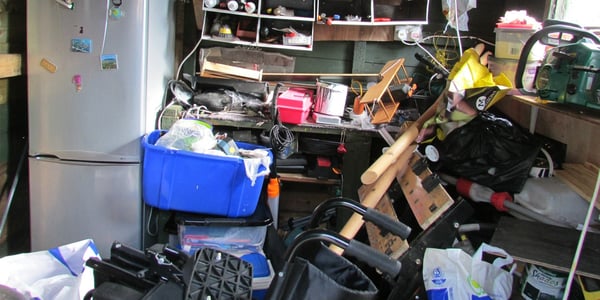
One of the most cluttered spaces in many homes is the garage. A recent study found that 50% of adults consider the garage the most disorganized area in their homes. A sure sign is that if your car no longer fits in your garage, it's often due to excess clutter.
After decluttering your garage, you can use the reclaimed space to store your vehicle out of the elements. You might even be able to use your newly clutter-free garage as a gym, workshop, or other bonus space. The garage also becomes a tool for reducing your material possessions. Hold a garage sale, and you’ll be surprised how many people will drive to your house to put your junk in their trunk.
A big clutter hallmark is having difficulty finding tabletop and countertop space. It's easy to see why these surfaces get filled up quickly. They are usually within arm's reach, making them convenient locations for dumping items you think you’ll get back to later. Unfortunately, “later” often means “never.” Resist the temptation to dump and ignore. Instead, commit to keeping these surfaces clear on an ongoing basis. One tip for reducing cluttered kitchen counters is to get rid of small appliances you don't use regularly.
No one wants to spend all day cleaning their homes. If daily cleaning becomes an all-day task, it might signify a clutter problem. You might be surprised to learn how much time you save by getting rid of clutter. Research from the National Soap and Detergent Association found that decluttering your home can eliminate 40% of housework-related tasks.
Living in a cluttered space can make you feel like you have too much to do because you're surrounded by everything you need to get done. If you're feeling less focused, like everything is a distraction, it could be a sign you need to declutter your home.
Experts say that cluttered environments make for cluttered minds. One tip is to be aware of when you’re feeling a little scattered and unfocused, or unsure of what you should be doing. These moments are opportunities to stop and clean. Make this a habit, and clutter will have a difficult time making a return appearance.
Clutter is a problem many of us face. Heeding these signs will help you become more aware of your “clutter quotient” and trigger you to take steps to get that clutter under control!
Sometimes clutter isn’t just about organization—it’s about space that no longer fits your needs. Mortgage Loans can help make downsizing, upsizing, or relocating possible so your home better supports how you live today.
Living50+